Summer 2024
A life unscathed by emotion, untouched by the ties of human relationships — it sounds tempting at times. What would that be like? To vanish. To let other people’s stories play out without my presence. No more disappointing anyone. No more doctors, no more opinions. Just… gone.
I took a much-needed break from social media last year. A full detox from Instagram’s algorithm-driven overstimulation made something very clear: this stuff is addictive. Like sugar withdrawal, but for the soul. It took weeks to adjust to the silence. A black screen. No notifications. No likes, no DMs, no comments. Profiles I had curated with care — now reduced to metrics. One less follower on someone else’s screen.
Sometimes I feel like I missed a secret everyone else figured out in high school. A code for surviving this world without getting bruised. Everyone else seems to float: keep things surface. Don’t get attached. Don’t overthink texts or silences. Winners don’t get stuck. Great leaders do not waver. There is something that should be hardwired in — that I just lack.
Wrong. This is simply incorrect. Malcolm Gladwell unraveled this thinking before my eyes in his book Outliers. In Summer 2020 someone who I had just met in networking told me I was an outlier meant for greatness. I had no idea what that term meant, and looking in the mirror failed to show what this person saw.
“You’ll know it when ya see it.” Famous farmer’s wisdom I was given many years ago, as a young man working in the corn fields of DeKalb County. Simple, yet so centric to the human experience.
As I began this subconscious search for what an Outlier is, I was also carrying a paperback copy of the book with me to every hospital admittal. I was rereading chapters trying to digest the metrics Malcolm weaved into stories of timing, sweat, blood, tears, and hot seasons in the rice paddies shaping entire cultural progressions of success. The book laying on my hospital nightstand also lead to some fantastic conversations with rotating residents. I loved picking the brains of these budding world changers.
On this quest for understanding, answers did not come quickly. I was seeking to know how to fill the boots of what this person had instilled in me. Be an Outlier. A title yes, but also an idea of being set apart.
In seeking to know, I had somehow fatefully or maybe providentially been introduced to someone who was this very thing. They were different. I did not yet know how and why, but this person would show themselves to be the genuine article. An Outlier had been found.
Things got personal during this last round of medical care — more personal than ever before. Crohn’s Disease doesn’t stay behind in the hospital. It comes home with you. It reshapes your routines, your identity — whether you invite it in or not. When you fight autoimmune disease, the treatment can feel like it’s killing a part of you, not just the sickness.
That’s why you hear patients say, “my Crohn’s,” or “my UC.” Battling disease is personal. Being The Patient is an experience no provider can truly understand unless they’ve lived it. Clinical experience isn’t the same. There’s a paycheck, boundaries, and a way to turn it off at the end of the day. Patients don’t have that.
As I’ve written before, I built a working relationship with Dr. Noa Cleveland during my time at the University of Chicago. I want to clarify that I use her first name with the utmost respect. We switched from Dr. Cleveland to Noa pretty quickly at her invitation. She signed off all communications as Noa, and never seemed to need her title to validate the work she does.
What stood out with her — and caught me off guard — was how human she allowed herself to be. After two months of care and a surgery, our appointments started ending with hugs.
The first hug felt like a life preserver tossed from shore. I was drowning. Human touch had become rare. What started as a simple crush became entangled with deeper parts of my identity. Because her decisions directly shaped my ability to work, advocate, and simply function, she stayed on my mind often. I wondered what she thought of me. Where did the boundary lie between provider and patient? Advocate and ally? Were we friends? Was it all in my head?
There were no inappropriate boundaries crossed. The moments were small, human, and real. But I was not okay. I was alone. And I took it personally.
At that time, Noa and I were in relatively regular contact because I was in a season of back-to-back surgeries, complications, and setbacks. Noa was incredibly kind, but also emotionally available — a stark contrast to any member of the surgical team I was working with in UChicago Colon and Rectal Surgery.
She made herself reachable via text and personal phone, on top of MyChart.
One phone call ended with her reflecting on how exhausted she was, and how much she wanted her daughters to know she loved them — even while away at work.
Wait — a top-tier doctor changing the way we battle IBD… and she’s opening up, just for a moment, to let me know she’s still human? That she cares?
I saw her lay aside the superhero mask and cape, and open a window into her world on a few occasions. I felt privileged to know Noa, and to be treated by her.
Those few moments of connection… they mattered more than I can say.
Noa and I had fun conversations in the clinic. I was able to joke with her despite the seriousness of our meetings. We had mutual respect.
She answered any question I could come up with, and invited more. I learned so much about IBD, treatment, and the medical world just by spending 20–30 minutes a month at appointments. A professor of medicine, professing to her patients so that they not only heal — but grow.
And so, in response to the title of this piece:
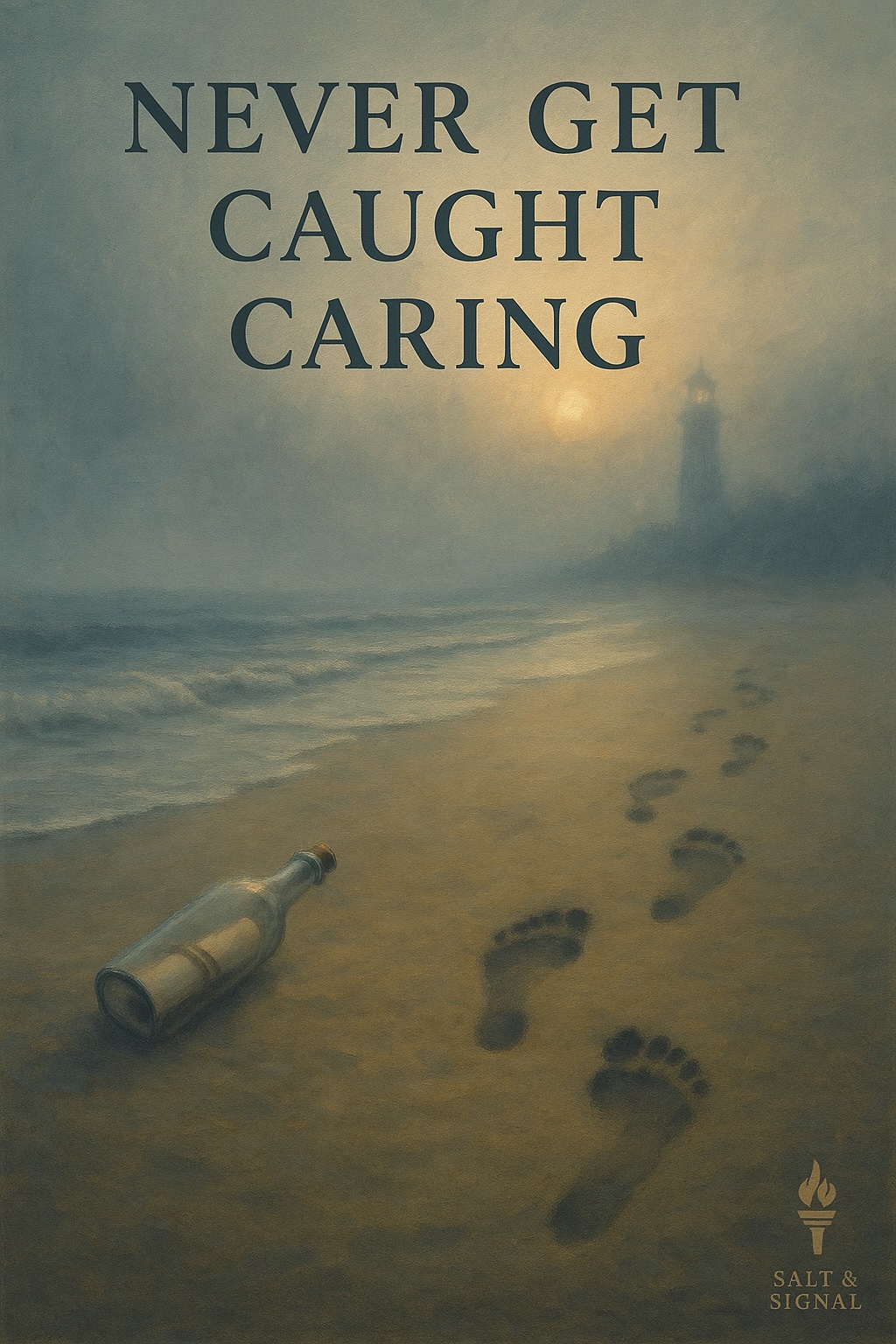
Yes — get caught caring.
It’s going to hurt sometimes. I promise you that. But the pain is worth it. There’s meaning in knowing you were fully present in someone’s life — even just for a chapter. That your presence mattered.
Social media can’t replicate that. It’s connection in plastic form — shiny, curated, and hollow. Take a break. Tell the people who truly care that you’re logging off for a while. Let the silence recalibrate you. Trust that the ones who matter won’t forget you.
If you sometimes feel behind in life — like you’re missing skills everyone else learned — you’re not alone. You’re normal. People are just really good at pretending. There are entire industries built on the appearance of having-it-together.
But no one has it all figured out.
People who are thriving have simply defined their success. Quietly. Personally. Maybe even without telling anyone.
But that private clarity lets them step into each day with purpose.
Keep caring.
Keep showing up.
Even if it hurts.
— CT
 Salt and Signal Studios
Leave a comment